I recently hopped onto one of The WaterClub’s boats in Knysna for a little river adventure and, yes, Knysna has a river that connects with the ocean. That’s the reason why it’s called an estuary and not a lagoon, as is often perceived.
Our purpose was to spot some birds, but it got me thinking about some of my previous adventures upriver and the things I discovered on those trips. And, as I do, I decided to take a deep dive into the history of the Knysna River, its forgotten bridges and the communities that once lived along its banks.
Did you know the Knysna River carries almost as much history as the estuary itself?
The Drift
Back in the day, if you wanted to cross into Knysna, you had to do it via “The Drift”. From around 1770 to 1862, this was the main way to get across the river before any bridges were built.
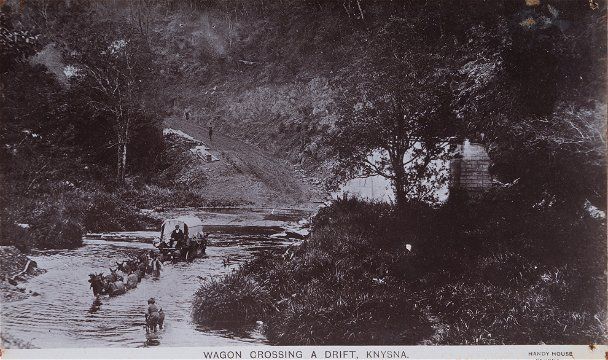
It was obviously tide-dependent, and in my mind’s eye I can just imagine the scene. Ox wagons laden with goods, lowering themselves into the water to cross.
There isn’t much evidence left of this today, but there is a section of the river that is still piled with rocks, and I always wonder if this was once part of the old crossing.
The “Gypsy Camp”
I’ve also heard stories about a so-called “Gypsy Camp” that popped up near The Drift, on the western side of the river crossing, during the late 1800s and early 1900s.
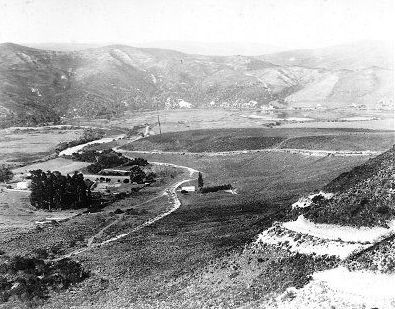
But I think they might have been referring to a makeshift camp of simple shacks and cottages that were home to labourers, woodcutters, fishermen and other working families, all looking for opportunities and a new life.
Road-building pioneer Thomas Bain also had a hand in improving this crossing. With 200 convicts and another 50 workers, he had constructed a causeway across The Drift by 1880.
Its location made sense. It was close to the river crossing and the transport routes into town. The settlement gradually disappeared as Knysna expanded, new bridges were built and The Drift, along with its “mishmash” community, became a thing of the past.
A memorial to the Brig Knysna
Close to The Drift, among the shrubs, stands a lone memorial stone honouring the Brig Knysna, the first substantial ship built here by George Rex.
She was launched at high tide into the river and floated down into the estuary. The year was 1831, marking the beginning of Knysna’s proud wooden boatbuilding heritage, a legacy that still lives on today.
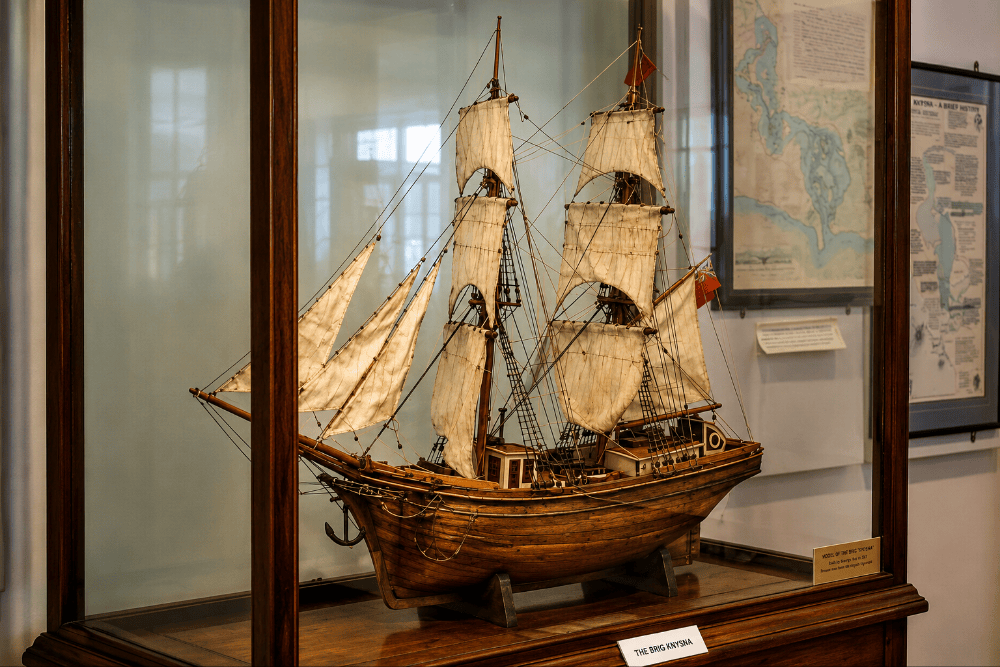
This particular ship was built from beautiful indigenous Outeniqua yellowwood and stinkwood. The area indicated that there was clearly enough space along the riverbanks, and it made perfect sense that it was closer to the forest regions of Goudveld, meaning no one had to cross the river with these massive trees.
Or may I be wrong?
Was all the timber coming from within the town via the old Coffee Pot train, the little train that pulled carriages filled with wood from the Diepwalle area, and then floated upriver to the building area?
I’ll have to look into that…
This 139-ton brig set sail on her first voyage on 26 July 1831 under Captain D. Watt, bound for Table Bay.
After a little research, I discovered that this was a bit of a rebellious move by George Rex. The government, as they do, closed the pilot establishment at the Heads, which obviously decreased shipping to and from Knysna.
This resulted in a serious decline in the economy of the area, and George was not going to let that happen!
The result was phenomenal. The Knysna had a long and successful career as a trader and general workhorse along the coast.
Let’s talk bridges
And boy, were there quite a few.
One of the lovely things about Knysna is that each bridge represents a different chapter in its history. From ox wagons and ferries to a timber bridge, a “not-so-well-thought-through” flood-damaged one, an engineering masterpiece and today’s busy N2 crossing, they all reflect the town’s determination to stay connected despite the challenges of crossing the river.
Not that we would think of it as much of a challenge today!
After the causeways, ferries and pontoons, bridge building was the next step.
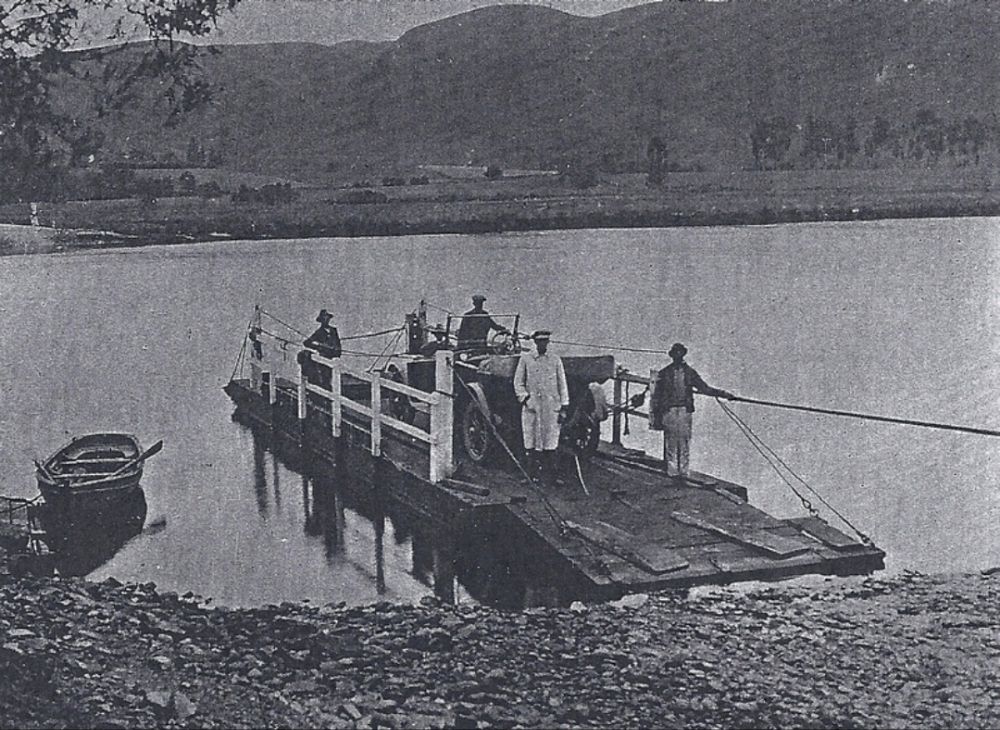
Knysna’s first bridge was built in 1893. Known as the Wooden Bridge, it became the first permanent bridge over the Knysna River.
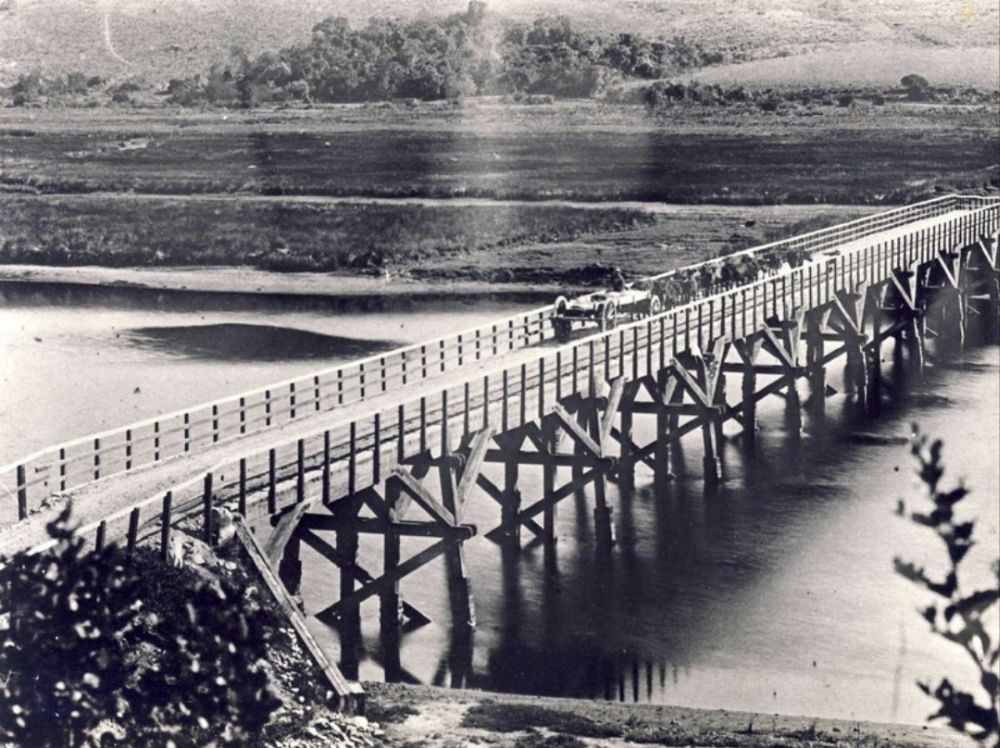
It quietly operated for 18 years. Built 2 km upstream, I have never seen any evidence of this bridge, and it might have had something to do with WORMS!!
Eek, I know.
It was infested by toredo worms, or naval shipworms. Hence the discovery of this awkward situation, along with the growing economy, a tender was put out in 1912.
I wonder what happened to the worms?
Then, in 1915, the Concrete Bridge replaced our worm-infested bridge, and all were happy and satisfied for a while…
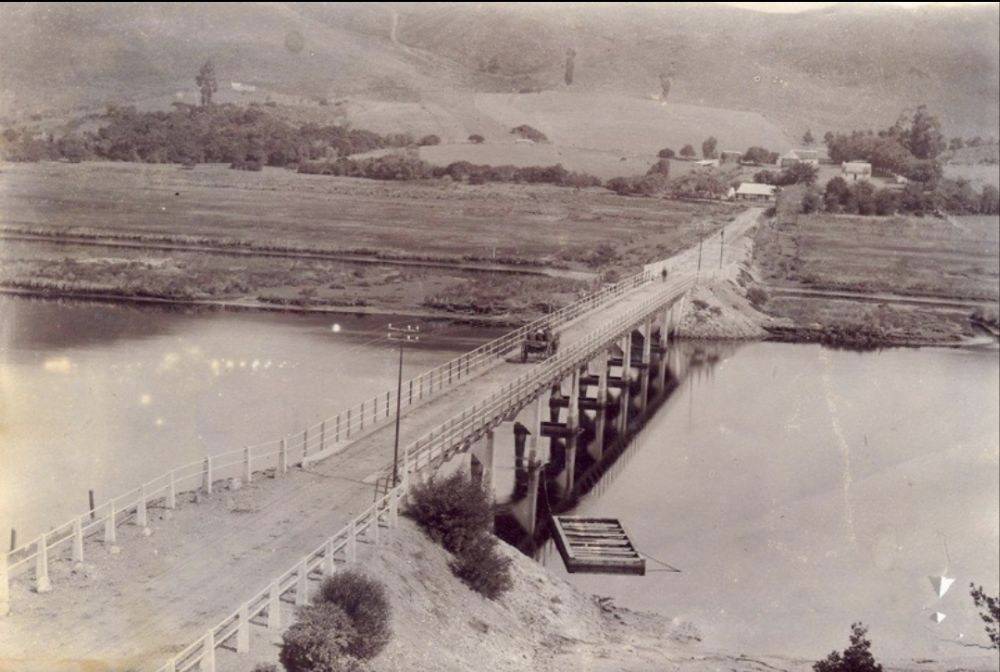
Well, this happiness only lasted for about seven months, until May 1916.
The bridge was washed away in a major flood. Apparently, the river rose about 3 metres above the normal flood level.
Oops.
Looking at the remnants, it makes perfect sense that the construction mindset behind the bridge was designed for drier times along this coastal area, with its rather unpredictable weather systems.
The Red Bridge
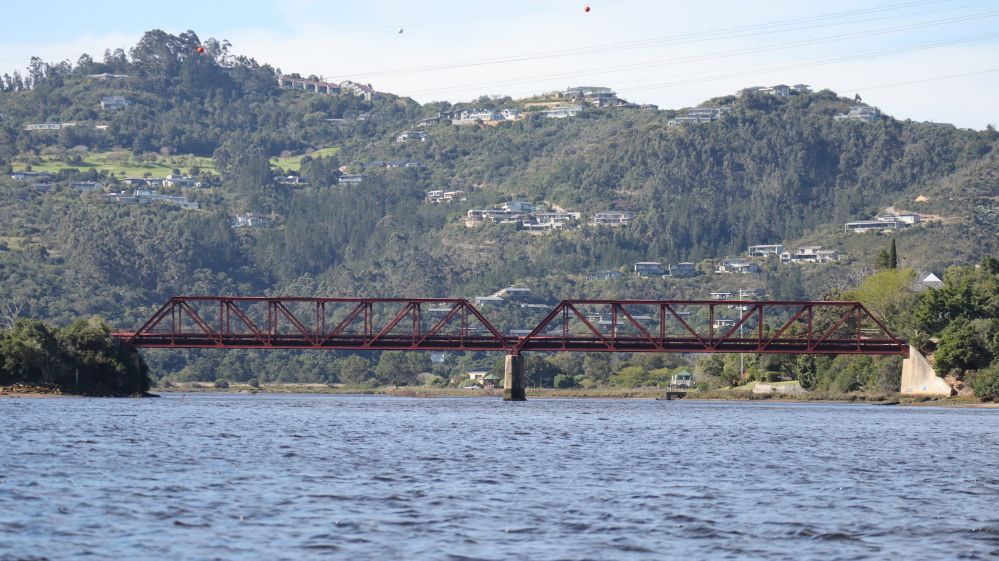
By 1923, the Westford Bridge stepped in to replace the failed Concrete Bridge.
This British masterpiece was built from steel and painted that iconic red. It carried traffic for about 50 years before being closed to vehicles in 1973, following the redirection of traffic from the old Seven Passes Road onto the newly developed highway.
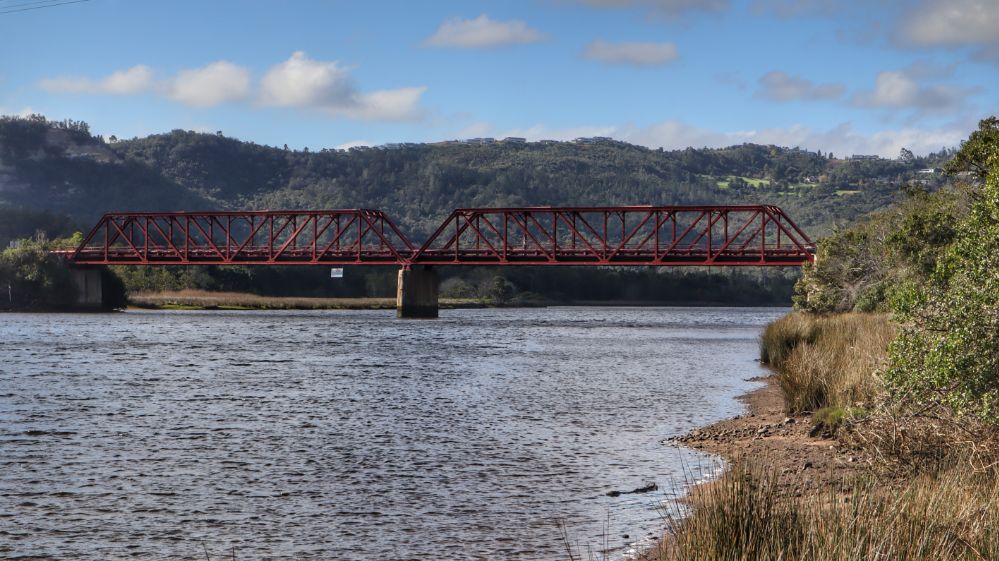
These days, it is fondly known as the Red Bridge and still stands beautifully proud. The only people crossing this bridge today are cyclists, runners and adventure seekers.
The White Bridge
Then, in 1955, the White Bridge was built as part of the new N2 highway, replacing the old Seven Passes Road and eventually becoming part of the main road into Knysna as we know it today.
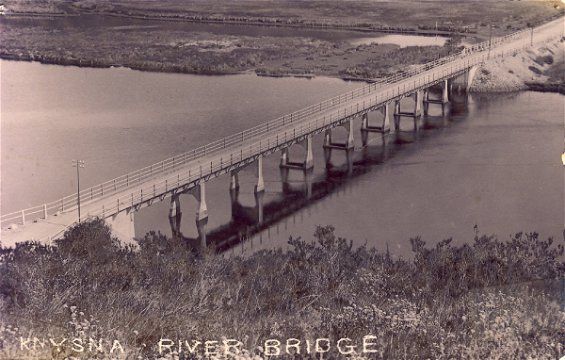
A truly scenic drive for anyone entering the town of Knysna. Especially the first time.
I remember driving with my dad into Knysna in the 1980s. His Peugeot 404 cruising across the first mock-up of the White Bridge. Me, a young teen with adventurous parents exploring South Africa.
It was wonderful…
Today, the river and The Drift are a bit of a local favourite. It’s definitely become one of mine, as it is perfect for summer swims, birdwatching, or simply enjoying the water.
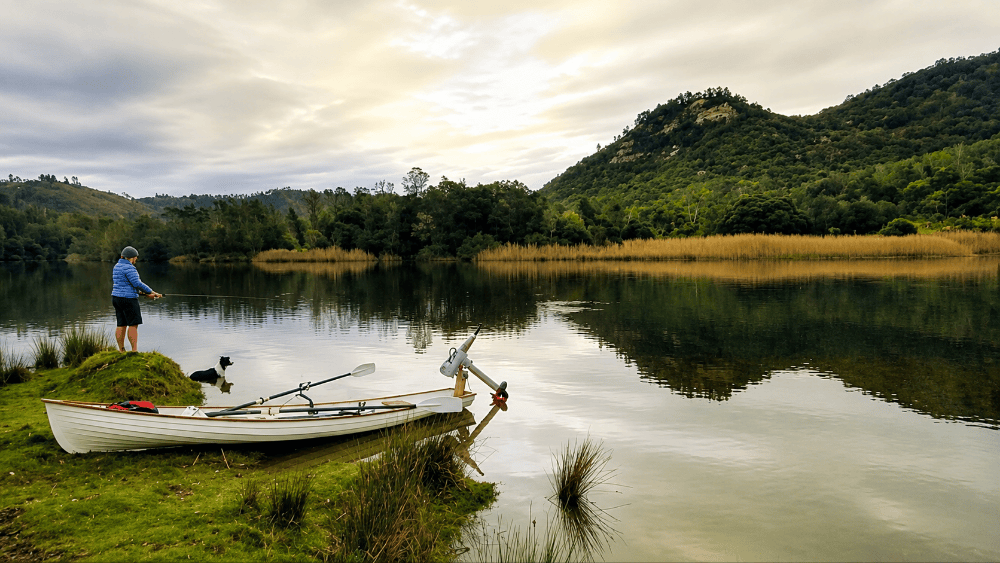
That’s my little Knysna River story for today.
But I’m pretty sure there’s still more to uncover…
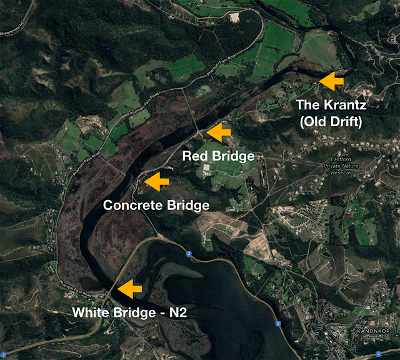
Sources: Murray Douglas – Knysna Museum (Martin Hatchuel)


